
Have you ever checked your bank account at the end of the month and wondered where all your hard-earned money went? You are definitely not alone.
Between daily coffee runs, recurring subscription fees, groceries, and sudden unexpected bills, managing personal finances can quickly feel overwhelming. Many people avoid creating a budget because traditional financial planning feels overly complex, restrictive, and exhausting—like a strict diet that cuts out everything fun.
Here is the good news: managing your money does not mean eliminating every joy from your life or spending hours managing complex spreadsheets. You just need an intuitive framework that brings structure to your spending without sacrificing your lifestyle.
Enter the 50/30/20 budget rule.
I personally remember the first time I tried budgeting. I felt completely lost and overwhelmed by tracking every single penny. But when I discovered the 50/30/20 rule, everything changed. It felt like a breath of fresh air because it didn't restrict my life; it just gave me a clear roadmap. In this post, I'll show you exactly how to use it step-by-step.
This flexible, beginner-friendly method gives every dollar a job, helping you take full control of your finances, pay off debt, and build long-term wealth—all while leaving room to enjoy life right now.
What Is the 50/30/20 Budget Rule?
Popularized by Senator Elizabeth Warren in her best-selling book All Your Worth: The Ultimate Lifetime Money Plan, the 50/30/20 rule is a simple percentage-based framework designed to balance your spending and saving automatically.
Instead of tracking every single penny across dozens of micro-categories, you divide your total after-tax income (your net take-home pay) into three broad categories:
• 50% Needs: Essential living expenses you cannot avoid.
• 30% Wants: Lifestyle choices and things that make life enjoyable.
• 20% Savings & Debt Repayment: Building your financial safety net and future wealth.
By using percentages instead of fixed dollar amounts, this rule adapts effortlessly to any income level or life stage.
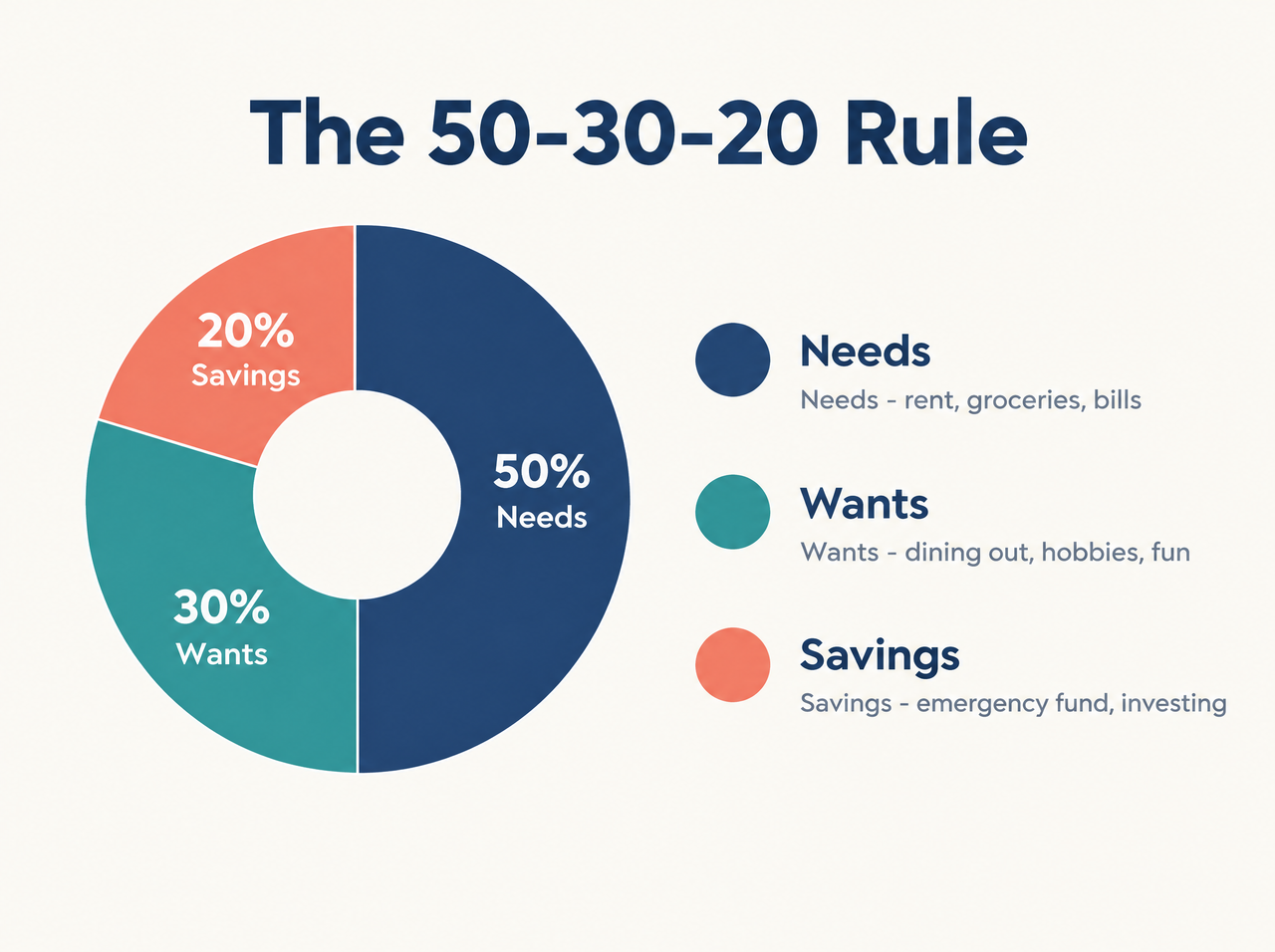
Breaking Down the Percentages
Let’s look at how each piece of the pie works and explore practical examples to help you organize your cash flow.
50% for Needs (The Essentials)
Your "Needs" category covers non-negotiable living costs—expenses that must be paid regardless of your current lifestyle or income status. If you were to stop paying these, your health, safety, or employment would be significantly impacted.
3 Practical Examples of Needs:
• Housing Costs: Monthly rent or mortgage payments, along with property taxes and basic home maintenance.
• Utilities & Essential Services: Electricity, water, heating, basic cell phone service, and high-speed internet needed for work.
• Basic Groceries: Essential food and household supplies necessary to feed yourself and your family (excluding restaurant meals).
Pro Tip: Keep your combined fixed expenses at or below 50% of your take-home pay. If your rent alone takes up 45%, you may need hips to look for ways to trim housing or utility costs.
3 Practical Examples of Wants:
• Dining Out & Entertainment: Coffees from cafes, weekend dinners with friends, concert tickets, and streaming services.
30% for Wants (Lifestyle Choices)
Budgeting should never feel like a punishment. The "Wants" category ensures you can spend money guilt-free on things you enjoy today while staying financially responsible. Wants include anything that is non-essential for basic survival—upgrades, entertainment, or extras that improve your quality of life.3 Practical Examples of Wants:
• Dining Out & Entertainment: Coffees from cafes, weekend dinners with friends, concert tickets, and streaming services.
• Hobbies & Leisure: Gym members and equipment, creative supplies, and weekend getaways.
This final category is where you build genuine wealth, create financial security, and secure your future. The remaining 20% of your take-home pay goes directly toward paying down high-interest debt and funding long-term financial goals.
3 Practical Examples of Savings & Debt:
• Emergency Fund: Setting aside cash in a High-Yield Savings Account (HYSA) to cover 3 to 6 months of essential living expenses.
• Retirement & Investing: Contributions to retirement accounts (like a 401(k) or Roth IRA), index funds, or individual stocks.
• High-Interest Debt Repayment: Paying more than the minimum balance on credit cards or personal loans to pay them off faster.
How to Implement the 50/30/20 Rule Today
Ready to put this budget into action? Follow these three simple, actionable steps to get started immediately:
Step 1: Calculate Your Net Income
Find your exact monthly take-home pay by checking your pay stubs or bank deposits. This is the net income left after taxes, social security, and health insurance deductions have been made.
• Example 1: If your monthly take-home pay is $4,000, your targets are:
• Needs (50%): $2,000
• Wants (30%): $1,200
• Savings/Debt (20%): $800
• Example 2 (Real-World Breakdown): If you earn $3,000 a month, your budget would look like this:
• Needs ($1,500): $900 rent + $300 groceries + $150 utilities + $150 car insurance.
• Wants ($900): $200 dining out + $100 gym + $50 subscriptions + $550 shopping/saving for a vacation.
• Savings ($600): $300 into an emergency fund + $300 into an index fund.
• Upgrades & Shopping: Buying brand-name clothing, purchasing the latest smartphone when your current phone still works, or upgrading your car.
20% for Savings and Debt Repayment (Your Future Self)
This final category is where you build genuine wealth, create financial security, and secure your future. The remaining 20% of your take-home pay goes directly toward paying down high-interest debt and funding long-term financial goals.
3 Practical Examples of Savings & Debt:
• Emergency Fund: Setting aside cash in a High-Yield Savings Account (HYSA) to cover 3 to 6 months of essential living expenses.
• Retirement & Investing: Contributions to retirement accounts (like a 401(k) or Roth IRA), index funds, or individual stocks.
• High-Interest Debt Repayment: Paying more than the minimum balance on credit cards or personal loans to pay them off faster.
How to Implement the 50/30/20 Rule Today
Ready to put this budget into action? Follow these three simple, actionable steps to get started immediately:
Step 1: Calculate Your Net Income
Find your exact monthly take-home pay by checking your pay stubs or bank deposits. This is the net income left after taxes, social security, and health insurance deductions have been made.
• Example 1: If your monthly take-home pay is $4,000, your targets are:
• Needs (50%): $2,000
• Wants (30%): $1,200
• Savings/Debt (20%): $800
• Example 2 (Real-World Breakdown): If you earn $3,000 a month, your budget would look like this:
• Needs ($1,500): $900 rent + $300 groceries + $150 utilities + $150 car insurance.
• Wants ($900): $200 dining out + $100 gym + $50 subscriptions + $550 shopping/saving for a vacation.
• Savings ($600): $300 into an emergency fund + $300 into an index fund.
Step 2: Review Your Past Spending
Look at your credit card statements and bank activity over the past 30 to 60 days. Group your expenses into Needs, Wants, and Savings to see where your actual numbers stand compared to the 50/30/20 target.
Step 3: Adjust and Automate
If you discover you are spending 65% on needs or 40% on wants, do not panic. Make small adjustments each month to shift closer to your goal. Set up automatic transfers on payday to send 20% of your paycheck directly into your savings or investment accounts so you pay your future self first!
Summary Checklist
Category Percentage Target Examples
Needs 50% Rent/mortgage, utilities, essential groceries, minimum debt payments
Wants 30% Restaurants, travel, hobbies, streaming subscriptions
Savings & Debt 20% Emergency fund, retirement accounts, extra debt paydown
The 50/30/20 budget rule is not about restriction—it is about clarity, balance, and intentional spending. By giving your money direction, you eliminate financial guesswork, reduce everyday stress, and guarantee that you are making consistent progress toward your ultimate life goals.
Remember, perfection is not required on day one. Budgeting is a practice, and bringing your spending into alignment with your priorities takes time.
What is your biggest budgeting challenge right now? Are your essential costs taking up more than 50% of your income? Or is impulse spending holding you back? Let me know in the comments below. And if you want more practical tips like this, don't forget to subscribe to my newsletter to get my free monthly budget template
Look at your credit card statements and bank activity over the past 30 to 60 days. Group your expenses into Needs, Wants, and Savings to see where your actual numbers stand compared to the 50/30/20 target.
Step 3: Adjust and Automate
If you discover you are spending 65% on needs or 40% on wants, do not panic. Make small adjustments each month to shift closer to your goal. Set up automatic transfers on payday to send 20% of your paycheck directly into your savings or investment accounts so you pay your future self first!
Summary Checklist
Category Percentage Target Examples
Needs 50% Rent/mortgage, utilities, essential groceries, minimum debt payments
Wants 30% Restaurants, travel, hobbies, streaming subscriptions
Savings & Debt 20% Emergency fund, retirement accounts, extra debt paydown
Take the First Step Toward Financial Freedom
The 50/30/20 budget rule is not about restriction—it is about clarity, balance, and intentional spending. By giving your money direction, you eliminate financial guesswork, reduce everyday stress, and guarantee that you are making consistent progress toward your ultimate life goals.
Remember, perfection is not required on day one. Budgeting is a practice, and bringing your spending into alignment with your priorities takes time.
What is your biggest budgeting challenge right now? Are your essential costs taking up more than 50% of your income? Or is impulse spending holding you back? Let me know in the comments below. And if you want more practical tips like this, don't forget to subscribe to my newsletter to get my free monthly budget template

No comments:
Post a Comment